Showing posts with label Brown Hare. Show all posts

Monday, 12 April 2010

Kirkwhelpington

Kirkwhelpington is thought to be a settlement of Anglo-Saxon origin. The parish church dates from 1210 and is dedicated to St. Bartholomew; it's graveyard is the resting place of Sir Charles Parsons, the celebrated Tyneside engineer and shipbuilder.

The source of the River Wansbeck is found near Sweethope Lough, in the midst of the wild Wannies moorland to the west of the village, but it is still hardly more than a tumbling stream as it meanders though the peaceful farmland to the south of the village.

A gated lane leaves the village to the east and a walk there, alongside the Wansbeck, is always productive.

The lane beside the Wansbeck

Chiffchaffs were calling from high in the road-side trees, making them difficult to photograph:

Chiffchaff (Phylloscopus collybita)

Fortunately, the flowers on the verges and amongst the trees were more obliging:

Lesser Celandine (Ranunculus ficaria)

Wood Anemone (Anemone nemorosa)

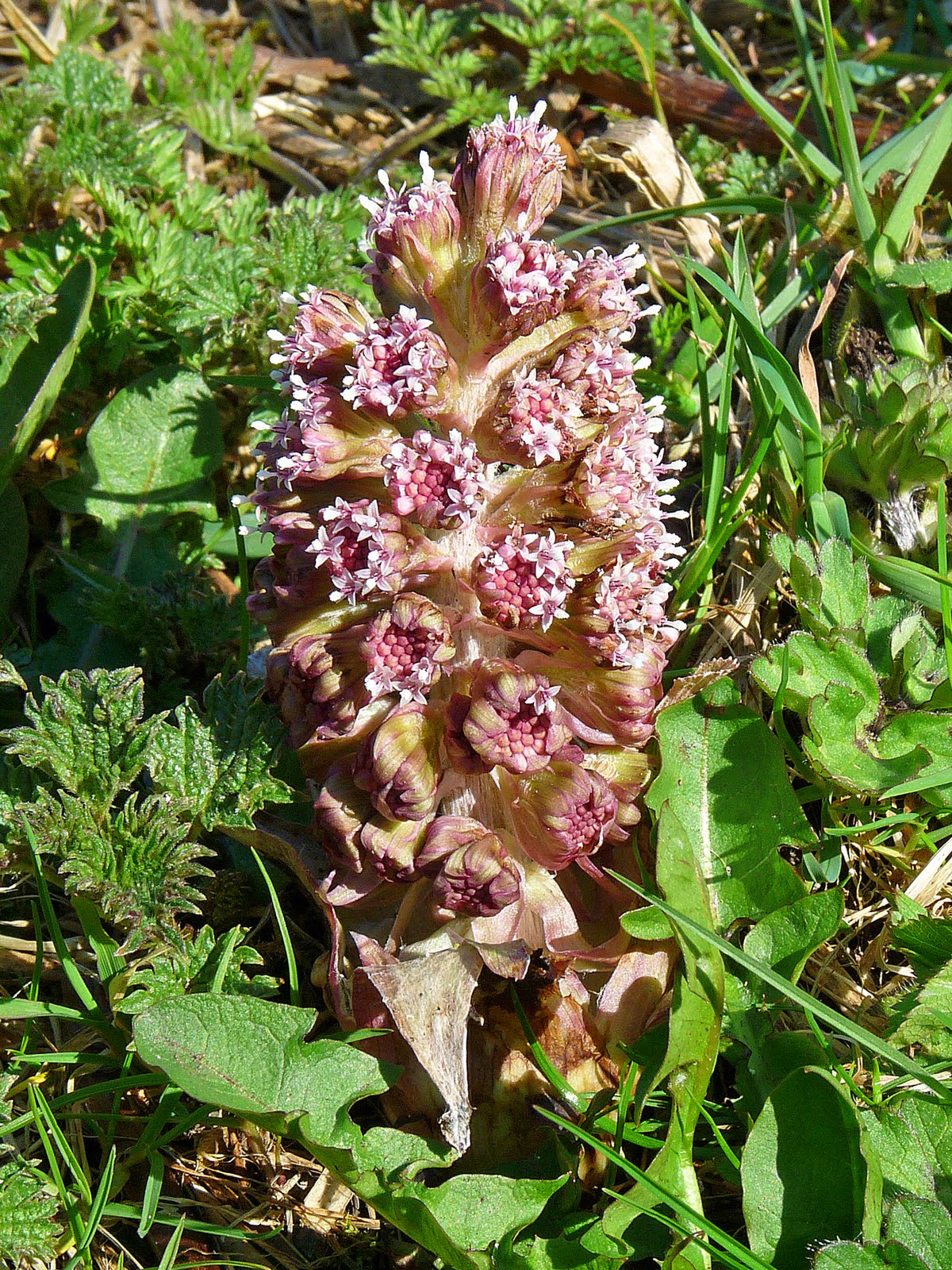
Butterbur (Patasites hybridus)

Dog's Mercury (Mercurialis perennis)

My journey home took me along the old enclosure road beside Harwood Forest where this Brown Hare crossed my path and settled long enough to have its picture taken:

Brown Hare (Lepus capensis)

Tuesday, 30 June 2009

A Hare on the Hill

The road in highest parts of Upper Coquetdale is very narrow, sometimes barely a car-width, and in places where the valley side is at its steepest, the road seems to look for the best contour and cling on by its finger tips. Occasionally, on the sharpest bends, there is an old post and rail fence on the down-side edge of the road. These are a blessing to passing itchy sheep but I doubt they would stop an errant motorist from crashing over the edge and down into the river.

It was on just such a bend last week that I came upon a carefree Brown Hare sitting in the middle of the road. The hare sat perfectly still, seemingly unstartled by my arrival. I reached for my camera and it was only when I lifted it to my eye that the hare reacted. Two quick steps took it across the road and up onto the grassy valley side. I thought I'd seen the last of it, but no. As I drove slowly forward, I saw that it was just above me in the grass, ears erect, eyes alert, crouched and ready to spring off in a flash.

Watching hares is always rewarding but this was a rather special encounter.

Brown Hare (Lepus capensis)

Saturday, 2 May 2009

Redesdale

My friend Beryl Charlton, in her book The Story of Redesdale, says: "The jewel in Redesdale's crown is it's history, for this is the valley which is richer in story and ballad than any other in England. Prehistoric people built their settlements here, the Romans established themselves at High Rochester and buried their dead in a cemetery near by. The most bitter battle in the medieval Anglo-Scottish wars was fought in Otterburn and the Border Reivers carried on their deadlie feuds from strongholds in the valley. The 17th century Covernanters held seccret meetings in the hills, whisky smugglers and drovers used the old Roman road of Dere Street and the body of the murderer William Winter was hung on the gibbet above Elsdon. The violence and stubborn courage, bloodshed and romance, triumphs and tragedies continue to excite the imagination of historians, novelists and poets".

The valley is also a place of great natural beauty, especially for those who seek it out. Kingfishers and herons patrol the river Rede and red squirrels are found in its woodland. And in spring and summer, the haunting call of breeding curlews is all around. Sadly, too many pass through without noticing in their haste to reach Scotland, just over the hill pass at Carter Bar at the valley head.

River Rede
The River Rede

Brown Hare (Lepus capensis)

Meadow Pipit (Anthus pratensis)

Rupert's Wood
Rupert's Wood