Showing posts with label Wheatear. Show all posts

Monday, 29 June 2009

Views of Upper Coquetdale

The visitor to Upper Coquetdale, whatever their interest, will be seldom disappointed. My two visits during the last week included views of a fine-looking Grey Heron, flying up from the river bank onto a nearby grassy slope ...

Grey Heron (Ardea cinera)

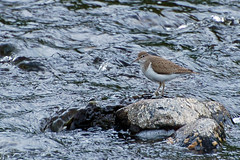
A Common Sandpiper calling from its perch on a fence ...

Common Sandpiper (Actitis hypoleucos)

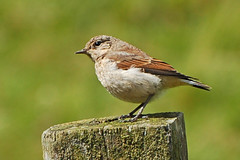
And lots of young Wheatears.

Wheatear (Oenanthe oenanthe); a juvenille

Along the Coquet there were clumps of Blotched Monkey Flower, garden escapees relocated now in splashes of mustard and blood-red cheerfulness on the river bank ...

Blotched Monkey Flower (Mimulus luteus)

River Water Crowfoot, and their reflections, in the river itself ...

River Water Crowfoot (Ranunculus fluitans)

And Wild Thyme clinging to a sunny, bank-side rock.

Wild Thyme (Thymus polytrichus)
Friday, 1 May 2009

Upper Coquetdale

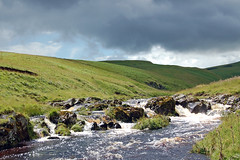
"The Coquet has its source far up amongst the Cheviot Hills. That part of the valley known as Upper Coquetdale is a wide tract of hill country lying on the north-western border of Northumberland, extending for a distance of some twenty-five miles eastward from the head of the Coquet."

David 'Dippie' Dixon introduces the area thus in his renowned book Upper Coquetdale, first published in 1903. The valley today is still a place "rife with historic associations". Dixon adds: "Throughout the length and breadth of this charming bit of Northumberland, whether it be amid the wide expanse of its heathery moorlands or the grandeur of its lofty hills, in it rocky ravines and wooded dells, the lover of nature will find an ample field of enjoyment and research."

I visit Upper Coquetdale regularly, grateful that it is, so to speak, just on my doorstep. My knowledge of its wildlife seems to grow with every visit.

River Coquet
The river Coquet, seen here in spate beside Kateshaw Crag,
eight miles from its source near the Scottish border.


Common Sandpiper (Actitis hypoleucos)
A Common Sandpiper (Actitis hypoleucos) seen on the river
in spring and summer.


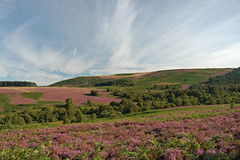
Holystone Burn
Heather moorland beside the Holystone Burn

Wheatear (Oenanthe oenanthe)
A juvenille Wheatear (Oeanthe oeanthe)

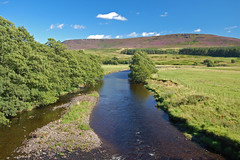
River Coquet at Hepple Bridge
The river flows lazily at Hepple Bridge